Nothing in here is coming back.
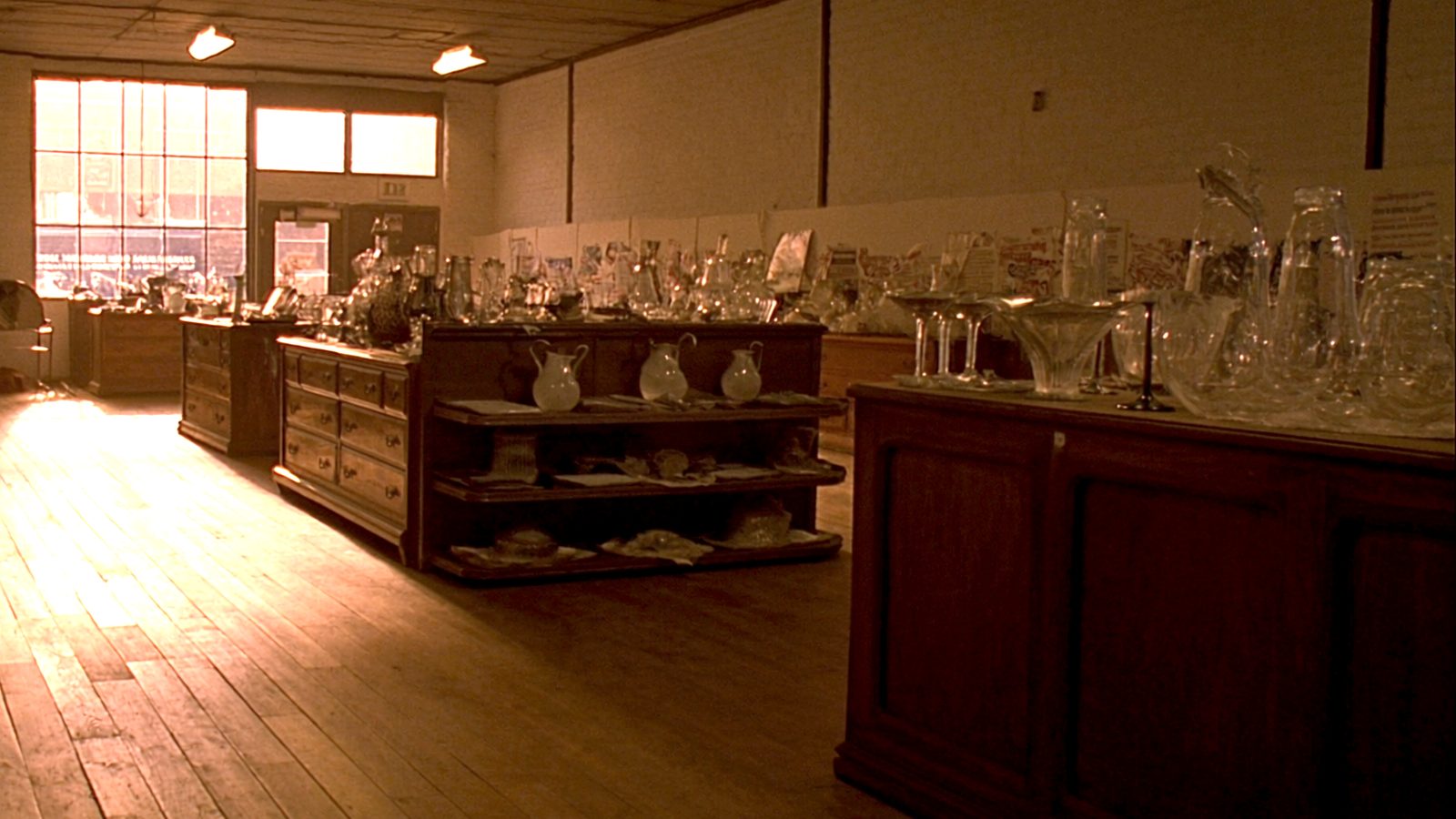
Thirty-eight dealers, about two hundred and sixty new tags a week, and one of everything. There is no catalogue to browse and nothing to reorder. What there is, is this piece of card, and every item in the building wears one.
Riverbend Vintage Market
Five lines, filled in by hand by whichever dealer put the piece out. Everything you need to decide is on it. Here is what each line is telling you.
It tells you whose piece it is, and therefore who to ask.
Thirty-eight dealers rent space here. They buy their own stock, price their own stock and restock on their own schedule, which is why the same aisle can be picked clean on a Tuesday and full again on Friday. The number on the tag is the only way to know whose taste you are standing in front of. Eight of the thirty-eight, and how often each one turns over:
- 14Marlene D.Walnut and oak case pieces, mostly 1880 to 1920Two or three pieces a week
- 06The Hedrick brothersHand tools, tins, hardware, anything painted redEvery Thursday
- 22Joyce P.Pyrex, Fire-King, enamelware, kitchenTwice a week, sells out fastest
- 31Ray L.Vinyl, radios, stereo gear, everything tested before it goes outMonthly
- 09Sandra V.Quilts, feedsack, table linen, sewingSeasonal, heaviest in October
- 17Bill T.Advertising signs, wooden crates, gas and oilWhenever he finds it, which is rarely
- 40Ann and TeresaCostume jewellery, compacts, hat pinsSaturday mornings
- 28The back roomWhatever came out of a house last week and has not been sortedConstantly
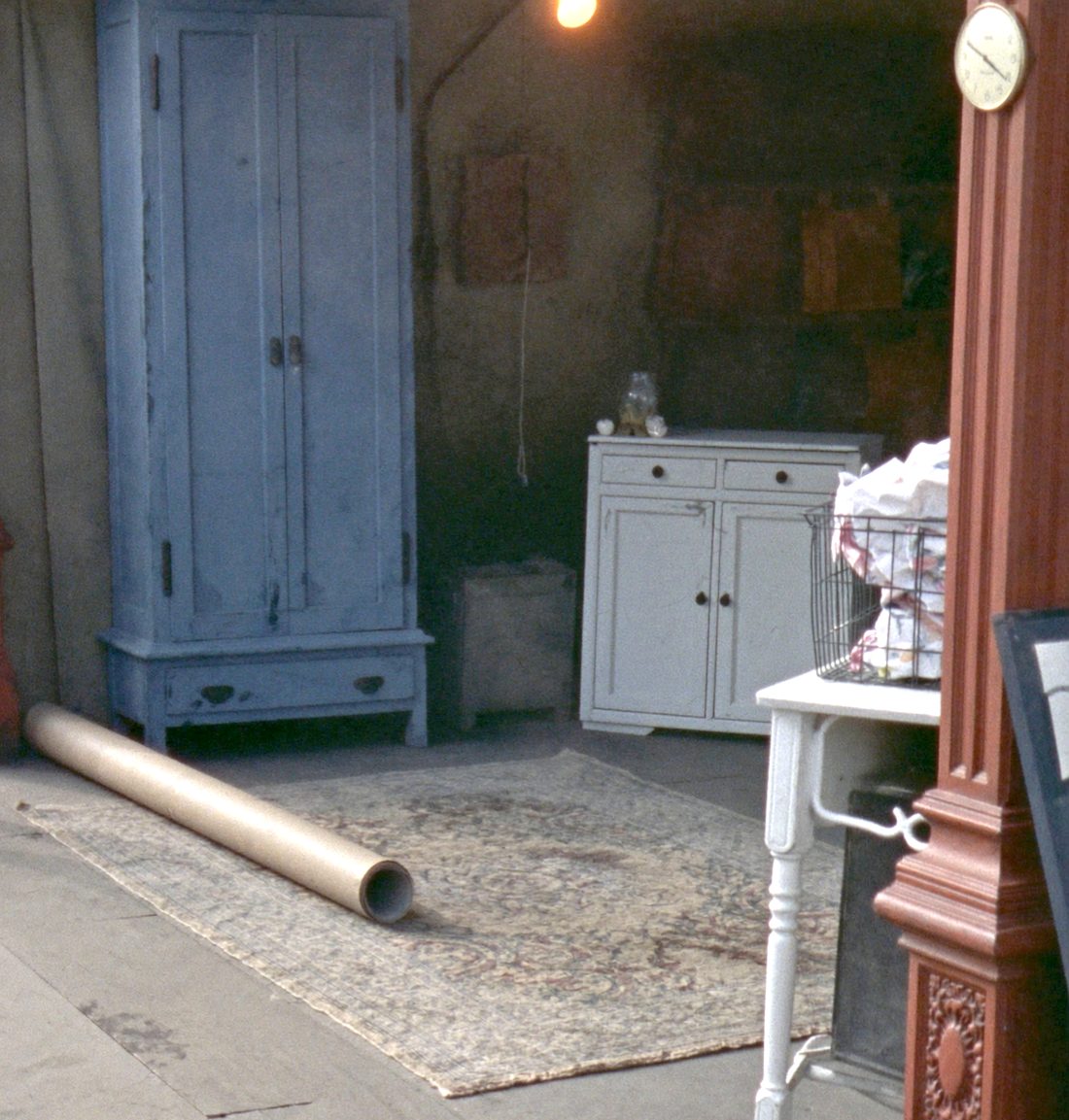
Booth nine, Sandra V. Every booth here is one person's whole opinion about what is worth keeping, and thirty-eight of those opinions is the entire business model.
Two numbers that tell you whether to buy it today.
Read as month and day. It is the date the piece was put on the floor, and it is the single most useful thing on the tag, because it answers both of the questions you are actually asking: will it still be here next Saturday, and is there any give in the price. The house rule every dealer here signs up to:
The dealer set this price on purpose and it stands. About a third of everything in the building sells inside this window.
A pencil line through the tag price with the new one under it, in the dealer's own hand. No sticker, no announcement.
A red dot goes on the corner of the tag. The counter can apply this without phoning anybody.
The dealer takes it home or it goes to the back room at whatever it will bring. Either way it leaves the aisle.
So a red dot on an April tag in July is not a bargain the dealer missed. It is a piece that has been walked past for two months, and the honest question is why. Sometimes the answer is that it is enormous, or brown, or that nobody in Platte County wanted a nine-drawer dresser this spring. Those are the ones worth carrying out.
The inverse is the harder discipline. A tag dated this week on something you want has no give in it at all, and it will not be here on your second visit. There is exactly one of it. We are not being difficult, and there is nothing in the back.
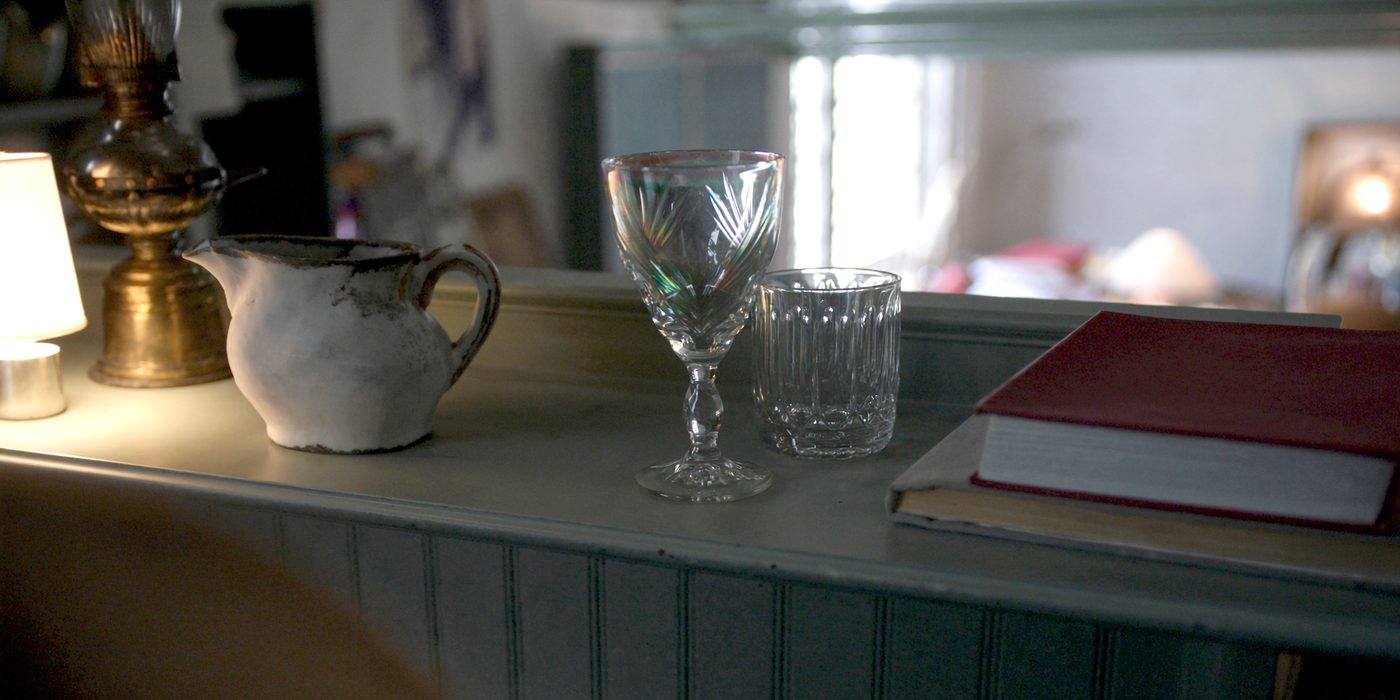
Booth twenty-two restocks twice a week and is the first booth to empty. Joyce prices to sell rather than to sit, which is why her tags rarely reach a red dot.
Nine words that the trade uses precisely and nobody explains.
The description line is short because the card is small, so every word on it is load-bearing. These are the ones that actually change what you are buying, written out the way a dealer here would say them across the counter.
- As found
- Nobody has touched it. Whatever is wrong with it is still wrong with it, and the price on the tag already knows that. This is the most common word in the building and it is not a warning.
- Refinished
- Stripped and recoated. On a piece made after about 1900 this is usually fine. On anything genuinely early it has cost the piece money rather than added any.
- Painted
- Somebody painted it recently, and it looks good. Understand that it is permanent and that you are buying the paint as much as the furniture.
- Original paint
- It has been that colour since it was made. Do not clean it, do not touch it up, and do not let anybody talk you into either.
- Married
- The top and the base did not start life together. Not a fault as long as the tag says so and the price reflects it. A married cupboard at a married price is a good buy.
- Associated
- A set assembled out of matching pieces that came from different places. Six chairs, four of them siblings.
- Repro
- Made to look old and not old. Legal, extremely common, and it belongs on the tag. If a dealer here leaves it off, tell the counter.
- Smalls
- Anything you can carry out under one arm. Roughly half of what is on the floor, and the whole of the upstairs.
- Brown furniture
- Plain Victorian and Edwardian oak, walnut and mahogany. It is cheaper now than it was in 1995, which is the best news on this page.
And five things to do with your hands
Photographs of old furniture lie, which is one reason this page does not try to show you the stock. Everything worth knowing about a case piece you find out by touching it, in about forty seconds, standing in the aisle.
- Pull one drawer all the way out and look at the corner. Hand-cut dovetails are slightly uneven and there are usually three or four of them. Machine-cut ones are identical and there are a dozen. Staples mean the 1960s or later.
- Look at the back boards. One wide board, or saw marks that run in arcs, puts it before plywood. A stapled hardboard back does not.
- Run your hand flat across the top. A lifted veneer feels like a blister and is invisible in every photograph ever taken of it.
- Push one corner where it stands. Old furniture racks a little. Whether that matters depends entirely on the floor it is going onto.
- Open it and smell it. Mildew in a case piece comes out with time and an open door. Cat does not come out at all.
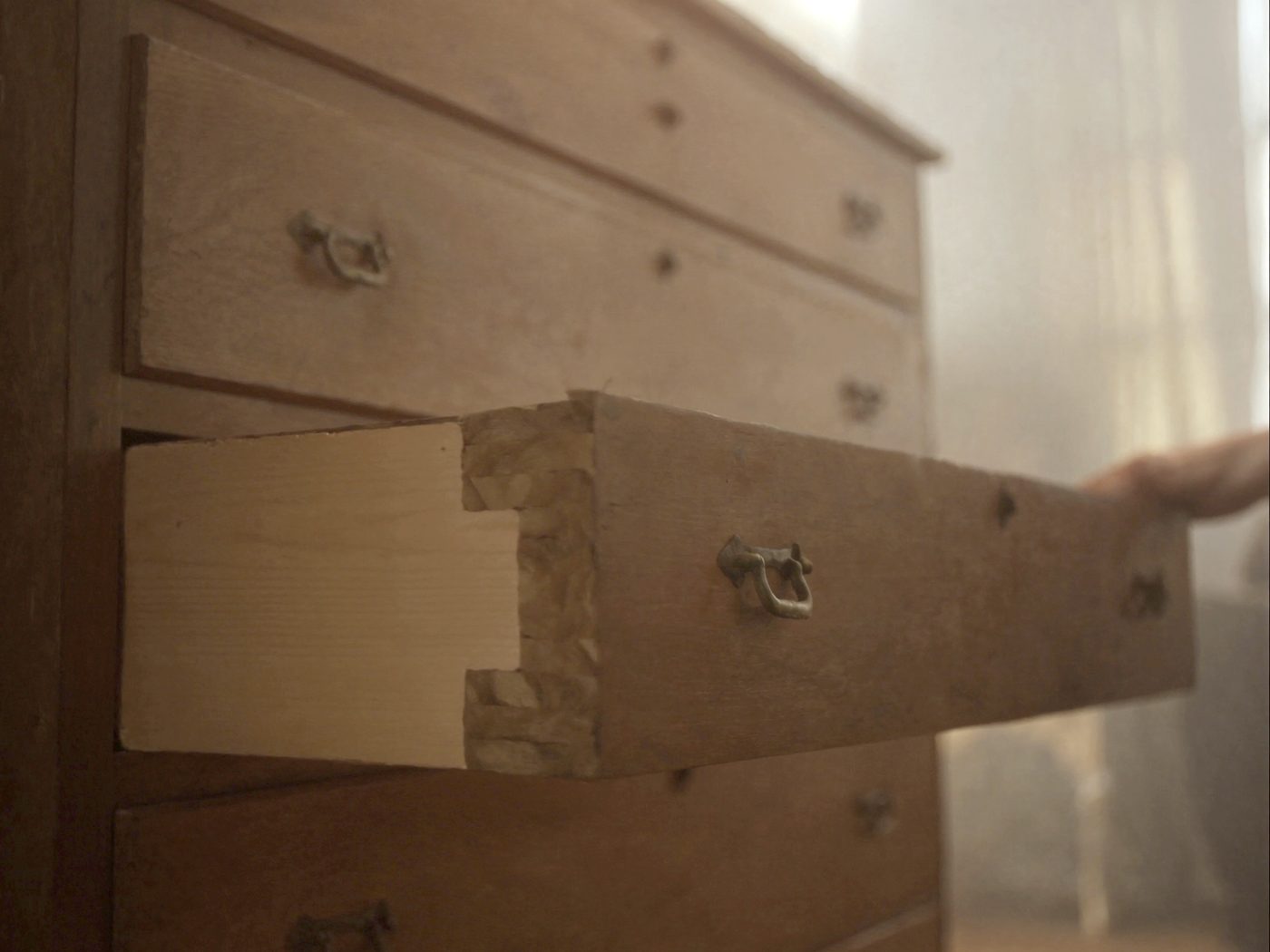
Dovetails, and none of them quite the same width. This drawer was cut by a person, and that is a thirty second check nobody has to teach you twice.
Yes, it is the price. Here is the whole of the exception.
Every dealer sets their own numbers and the counter cannot change them on a whim, so the answer to the question everybody asks quietly is mostly yes. The exceptions are narrow, they are the same for everyone, and there is no advantage in knowing somebody.
- Under forty dollars, the tag is the tag.It is not worth a phone call to the dealer and we will not make one. That covers most of the smalls and all of the glass.
- Over forty dollars, ask and we will phone.Ask at the counter and give us your number. The dealer usually answers inside the hour and about half of them say yes to something.
- An offer is normal. Half is not.Nobody in this building has ever been offended by an offer. Ten or fifteen per cent is a conversation. Half the tag price ends the conversation.
- Three or more from one booth, ask anyway.Dealers here would rather move four things at a discount than one at full price, and most of them will tell you so themselves.
- Cash changes nothing.We take cards, the dealer is paid the same either way, and any shop that tells you otherwise is telling you something else as well.
Firm, or open to an offer, decided before you walked in.
The dealer ticks one of the two when they write the tag, so the negotiation is over before you get to it, and the same tag says the same thing to everybody who picks it up. That is the entire point of the box. What happens after you decide is below.
Holding it
We will hold anything for twenty-four hours on a name and a phone number, no deposit. Past that we need a quarter down, and we will hold a piece of furniture until the following Sunday so you can get a truck and a second person. We do not hold things indefinitely and we will ring you before it goes back out.
Getting it home
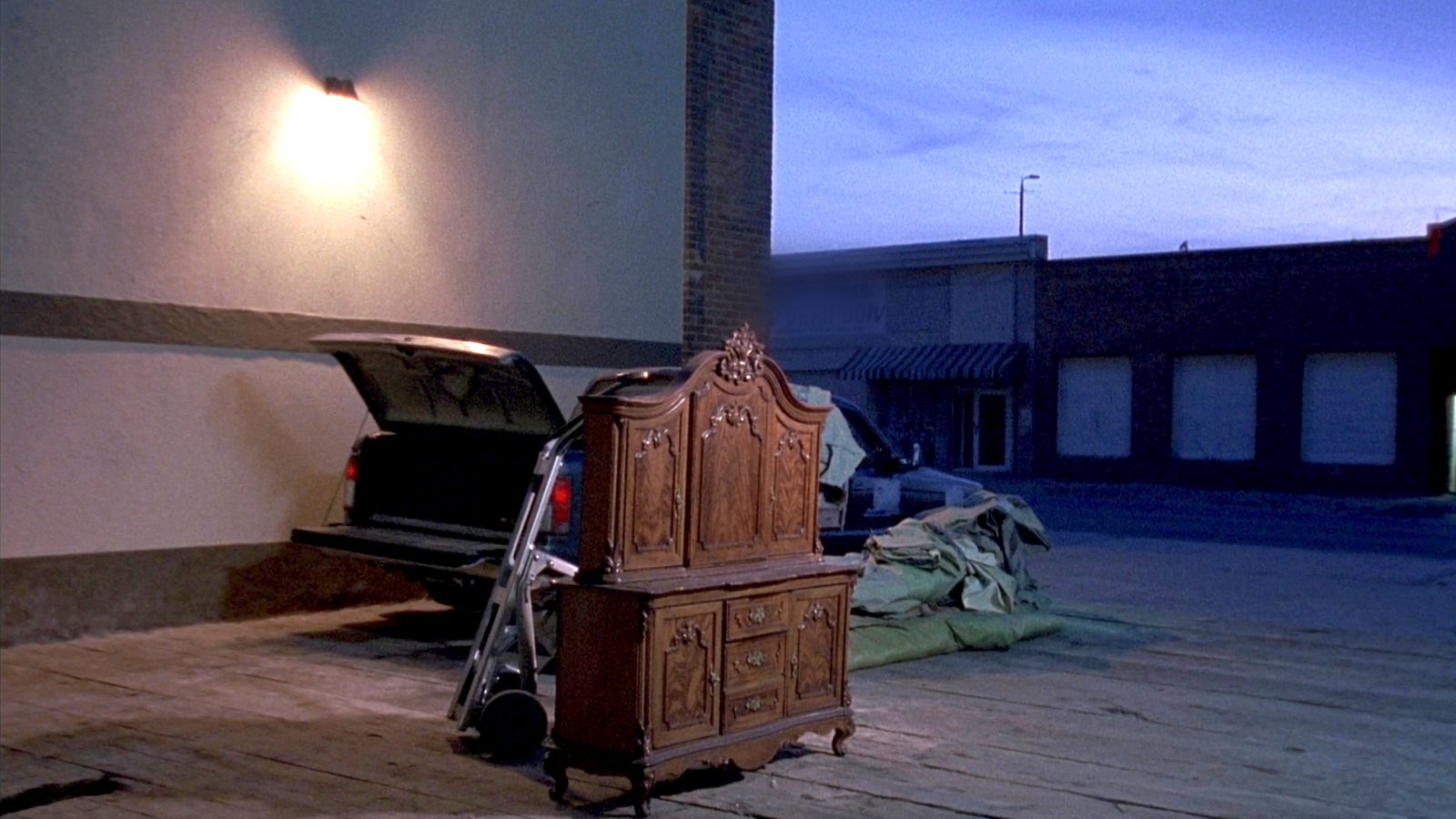
We do not deliver. There is a hand truck, moving blankets and rope at the counter and you are welcome to all three. There are two names on a card by the register who move furniture in the Northland for cash, and neither of them works for us. The loading door is at the back, off the gravel.
We rent booths. We do not buy your things.
This is the question we answer most often on the phone, so here it is plainly. A booth is yours to fill, price and restock, and there is usually a short list. Before you ring, the two lists that will save you a trip across town with a car full of boxes.
Sells here, reliably
- Oak and walnut case pieces before about 1940
- Enamel-top kitchen tables and Hoosier cabinets
- Pyrex, Fire-King, and anything with a pattern people can name
- Quilts, feedsack, and plain table linen
- Hand tools with wooden handles, and wooden crates
- Oil lamps, stoneware crocks, cast iron that has been used
- Christmas, from August onward, every year without fail
Everybody brings it, nobody buys it
- Complete china services for twelve
- Bedroom suites from the 1980s in oak veneer
- Entertainment centres, of any age or size
- Encyclopedia sets and condensed book club editions
- Figurine collections sold as collectible when they were new
- Upright pianos, which we cannot take at any price
- Anything the internet told you was worth four figures
The building is worth a Saturday. Not every Saturday is worth the building.
Some weeks three houses come in at once and the back room cannot keep up. Some weeks it is quiet and you will walk the whole floor in twenty minutes. Ring the counter before you drive out and somebody will tell you honestly which kind of week it is, because a wasted trip costs us more than it costs you.
Hours
- Monday to Friday10 to 6
- Saturday9 to 6
- Sunday11 to 5
- New stock outThursday and Saturday
Where
123 Main St
Parkville, Missouri 64152
Free parking on the gravel behind the building. The loading door is on that side. Both floors, no lift, and the stairs are steep.
Booths
Thirty-eight booths, two floors, and a short waiting list. Rent is monthly with no commission taken on your sales. Ask for Dale at the counter.